
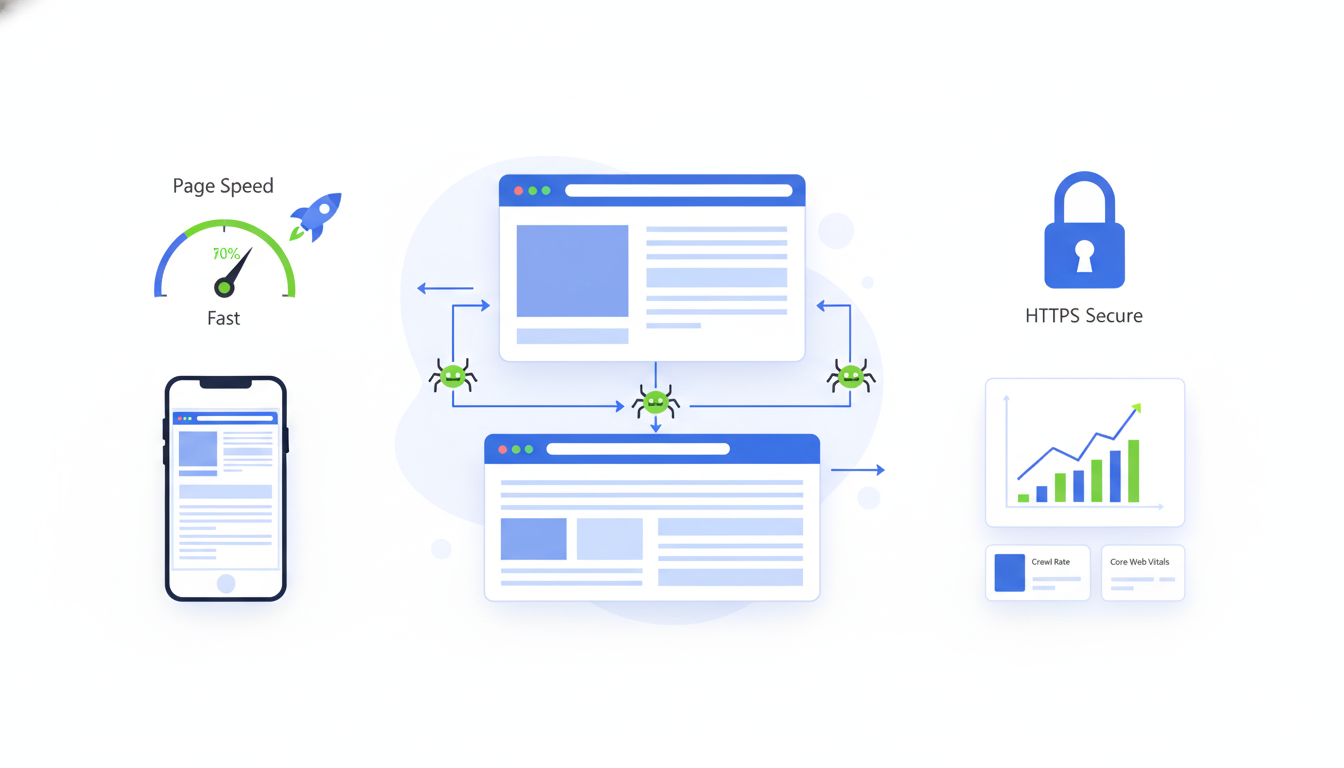
Technical SEO Basics Every Business Owner Should Know
Many business owners think SEO is only about keywords and content. But behind every website that ranks well, there is something even more important: Technical SEO.
Technical SEO is what allows Google to find, understand, and trust your website. Without it, even the best content and strongest backlinks won’t perform properly.
This guide explains the most important technical SEO basics in simple language, so every business owner can understand what really matters.
What Is Technical SEO?
Technical SEO refers to the behind-the-scenes work that helps search engines crawl, index, and rank your website correctly.
It focuses on:
- How fast your website loads
- How easy it is for Google to crawl pages
- Whether your site works on mobile
- How secure your website is
- How clean and structured your pages are
If technical SEO is weak, Google struggles to trust and rank your website.
Why Technical SEO Is Critical for Business Websites
Even if your content is good, Google will not rank a website that is:
- Slow
- Broken
- Hard to navigate
- Not mobile-friendly
- Confusing to search engines
Technical SEO makes sure your website:
- Appears in Google search results
- Loads quickly for users
- Delivers a smooth experience
- Supports higher rankings
It is the foundation of all SEO success.
1. Website Speed Matters
Google favors fast websites because users do.
Slow websites:
- Increase bounce rates
- Reduce conversions
- Hurt search rankings
You should aim for:
- Pages loading in under 3 seconds
- Optimized images
- Clean code
- Reliable hosting
Speed is one of the easiest ways to improve both SEO and user experience.
2. Mobile-Friendly Design
Google now uses mobile-first indexing, meaning it looks at your mobile site before the desktop version.
If your site does not work well on phones:
- Rankings drop
- Users leave
- Leads decrease
Your website should:
- Adjust to all screen sizes
- Have readable text
- Be easy to tap and scroll
Mobile usability is no longer optional.
3. Secure Website (HTTPS)
A secure website uses HTTPS instead of HTTP.
Google considers HTTPS a ranking signal because it:
- Protects user data
- Builds trust
- Prevents security warnings
If your site is still on HTTP, it is hurting both SEO and credibility.
4. Crawlability and Indexing
Google must be able to:
- Find your pages
- Read them
- Add them to its index
You need:
- A sitemap
- A clean robots.txt file
- No blocked important pages
- No duplicate page confusion
If Google cannot crawl or index your pages, they will not rank.
5. Clean Website Structure
Your website should be easy to navigate for both users and search engines.
Good structure means:
- Clear menus
- Logical page hierarchy
- Internal links connecting pages
- No broken links
This helps Google understand what each page is about and which ones are important.
6. No Broken Pages or Errors
Broken pages (404 errors) and server problems create a bad experience and hurt SEO.
You should regularly check for:
- Broken links
- Missing pages
- Server errors
- Redirect issues
Fixing these improves trust with Google.
7. Proper Use of Canonical Tags
Sometimes multiple pages can show similar content. Canonical tags tell Google which page is the main one.
Without them:
- Google may rank the wrong page
- Your SEO value gets split
This is especially important for e-commerce and service websites.
8. Core Web Vitals
Google measures how users experience your site using Core Web Vitals:
- Loading speed
- Interactivity
- Visual stability
These affect both rankings and conversions.
Final Thoughts
Technical SEO may not be visible, but it is the backbone of your online success.
A technically strong website:
- Ranks higher
- Converts better
- Builds trust
- Supports all marketing efforts
If your website is slow, broken, or hard to crawl, no amount of content or ads will fix it.
Getting technical SEO right means giving your business the foundation it needs to grow online.