
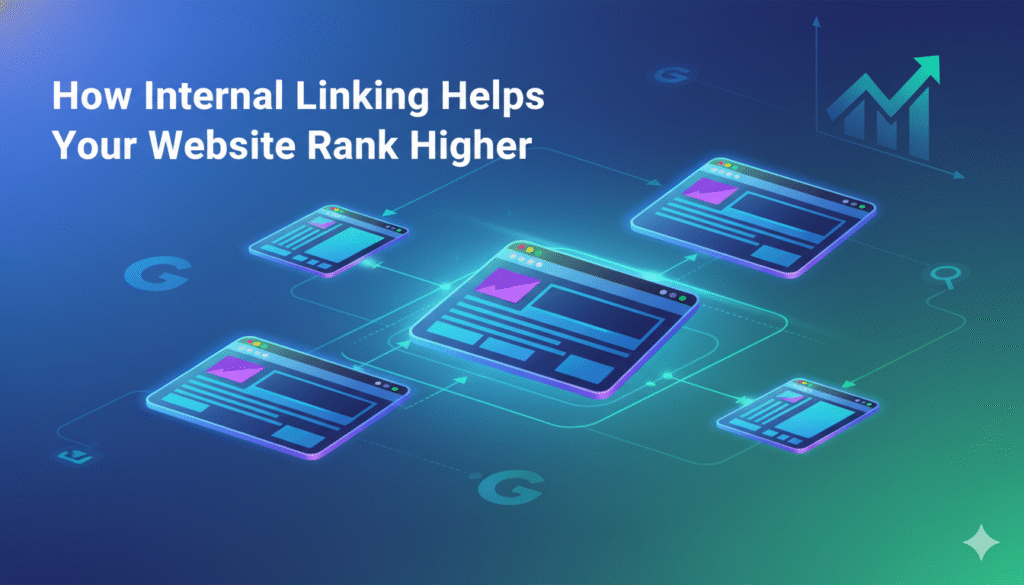
How Internal Linking Helps Your Website Rank Higher on Google
Search engine optimization involves many strategies, but one of the most overlooked yet powerful techniques is internal linking. Many websites focus heavily on backlinks while ignoring how their own pages connect with each other.
When used correctly, internal links help both users and search engines navigate your website more effectively. They also play an important role in improving rankings on Google.
Let’s explore how internal linking works and why it is essential for SEO.
What Is Internal Linking?
Internal linking refers to linking one page of your website to another page within the same domain.
For example, if a blog post links to another article or service page on the same website, that is an internal link.
Internal links help search engines like Google Search Console understand the structure of your website and discover new content more easily.
Why Internal Linking Is Important for SEO
Internal linking improves SEO in several ways:
- Helps search engines discover and index pages
- Distributes authority across your website
- Improves user navigation
- Increases time spent on your website
When your pages are connected properly, search engines can understand which pages are most important.
1. Helps Search Engines Discover Your Pages
Search engines use bots to crawl websites and discover content. If your pages are not linked properly, some of them may remain hidden.
Internal links create pathways that help search engine crawlers navigate through your entire website.
This increases the chances of your pages getting indexed and appearing in search results.
2. Distributes Page Authority
When a page on your website receives backlinks or strong traffic, it gains authority.
Internal linking allows you to pass some of that authority to other pages by linking to them.
For example, if one blog post ranks well, linking from that page to other relevant pages can help improve their visibility as well.
3. Improves User Experience
Good internal linking makes it easier for users to find related information on your website.
Instead of leaving after reading one page, visitors can explore more content through relevant links.
This leads to:
- Longer session duration
- Lower bounce rate
- Better engagement
Search engines consider these user signals when ranking websites.
4. Helps Search Engines Understand Content Relationships
Internal links help search engines understand how different pages on your website relate to each other.
For example:
- A blog about SEO tools linking to a guide on keyword research shows topic relevance.
- A service page linking to case studies shows authority.
This helps search engines understand the context and structure of your website.
5. Strengthens Important Pages
Internal linking helps you highlight your most important pages, such as:
- Service pages
- High-value blog content
- Product pages
By linking to these pages more frequently, you signal to search engines that these pages are important.
Best Practices for Internal Linking
To get the best SEO results, follow these internal linking best practices:
Use descriptive anchor text
Instead of using generic phrases like “click here,” use keywords that describe the content.
Link to relevant pages
Only link to pages that provide additional value to the reader.
Maintain a clear site structure
Organize your website so that important pages are easy to reach.
Avoid excessive links
Too many links on a page can dilute their value.
Common Internal Linking Mistakes
Many websites make mistakes such as:
- Not linking to important pages
- Using vague anchor text
- Creating orphan pages (pages with no links pointing to them)
- Overloading pages with too many links
Fixing these issues can significantly improve your website’s SEO performance.
Final Thoughts
Internal linking may seem like a small SEO tactic, but it has a big impact on how search engines understand and rank your website.
By creating a clear structure, linking relevant pages, and guiding users through your content, you can improve both user experience and search visibility.
In many cases, improving internal linking alone can help boost your website’s rankings on Google.