
How Digital Marketing Agencies Measure ROI Beyond Traffic
For a long time, digital marketing success was measured by traffic numbers—page views, impressions, and clicks. While traffic is important, it doesn’t automatically translate into business growth.
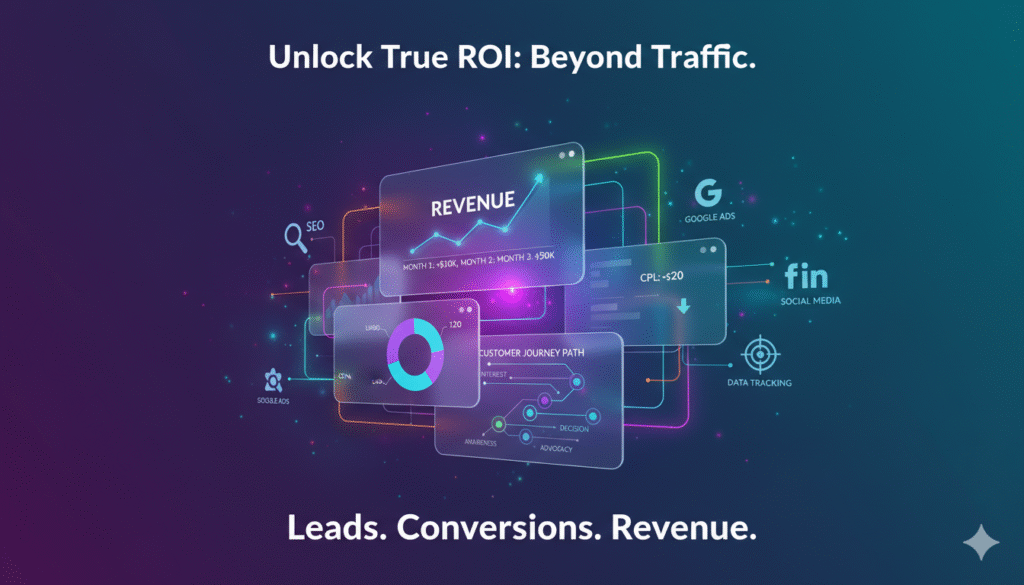
In 2026, professional digital marketing agencies measure ROI beyond traffic by focusing on leads, conversions, revenue, and long-term value. Because at the end of the day, businesses don’t grow on visits—they grow on results.
Let’s break down how modern agencies actually measure ROI.
Why Traffic Alone Is Not a Reliable Metric
High traffic can look impressive in reports, but it often hides real issues:
- Visitors don’t convert
- Leads are low quality
- Sales don’t increase
- Marketing spend keeps rising
Traffic without intent is just noise. That’s why agencies go deeper.
1. Tracking Real Leads Instead of Page Views
The first shift agencies make is tracking actions, not just visits.
These include:
- Contact form submissions
- Phone call clicks
- WhatsApp inquiries
- Appointment bookings
- Demo requests
Each of these actions represents real interest, not casual browsing.
2. Measuring Cost per Lead (CPL)
Instead of asking “How many clicks did we get?”, agencies ask:
“How much did each lead cost?”
CPL helps businesses understand:
- Which channels bring quality inquiries
- Where to scale budgets
- Which campaigns waste money
Lower CPL with consistent quality = strong ROI.
3. Evaluating Lead Quality and Conversion Rates
Not all leads are equal.
Agencies track:
- Lead-to-conversation rate
- Lead-to-customer rate
- Conversion rate by channel
A campaign with fewer but high-intent leads often delivers better ROI than one with high volume and low quality.
4. Connecting Marketing Efforts to Revenue
Advanced agencies link marketing data to actual sales.
They measure:
- Which campaigns generate paying customers
- Which keywords drive revenue
- Which platforms support long-term growth
This helps businesses invest in what actually makes money.
5. Understanding User Behavior Before Conversion
Knowing how users convert is as important as knowing that they convert.
Agencies analyze:
- Pages visited before a lead
- Time spent on key pages
- Drop-off points in the funnel
This data improves website design and messaging without increasing ad spend.
6. Measuring Customer Lifetime Value (LTV)
ROI doesn’t stop at the first sale.
Agencies consider:
- Repeat customers
- Long-term contracts
- Upsells and renewals
Channels that attract customers with higher lifetime value often deliver better ROI—even with fewer leads.
7. Channel-Wise ROI Comparison
Modern agencies compare ROI across:
- SEO
- Google Ads
- Social media advertising
- Local SEO
- Content marketing
This ensures resources are allocated to the highest-performing channels.
8. Continuous Optimization Using Data
ROI measurement is ongoing.
Agencies continuously:
- Test ad creatives
- Improve targeting
- Optimize landing pages
- Refine CTAs
Small improvements compound into significant growth over time.
Final Thoughts
In today’s digital landscape, traffic is just the starting point.
Real success comes from:
- Leads
- Conversions
- Revenue
- Long-term customer value
That’s why modern digital marketing agencies measure ROI beyond traffic—because growth depends on results, not vanity metrics.